

Potassium is an essential mineral and electrolyte that plays a critical role in electrolyte regulation, nerve function, muscle control, and blood pressure. Because it carries a small electrical charge, it helps activate various cellular, nerve, and muscular processes.
Its levels are controlled by the kidneys. Primarily, potassium functions to regulate water and mineral balance throughout the body. Potassium works with sodium to maintain the body’s normal blood pressure. Research suggests that increasing dietary potassium may provide a protective effect against hypertension (high blood pressure) by increasing the amount of sodium excreted from the body. A high potassium intake has also been linked to a reduced risk of death due to cardiovascular disease.

Key Roles in the Human Body
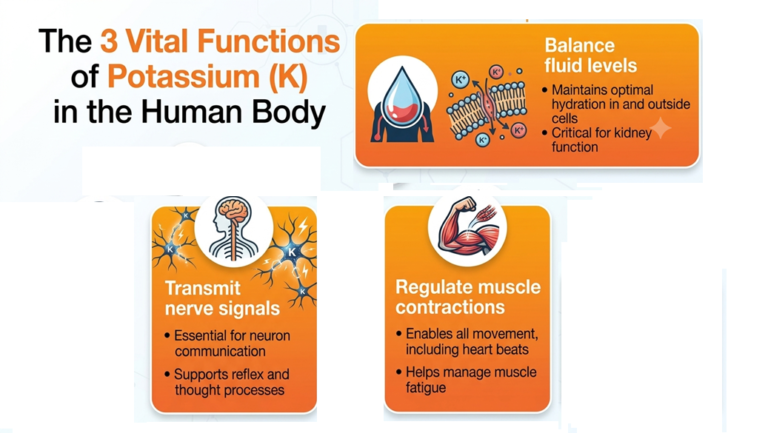
Potassium is found in many foods, especially those of plant origin such as oranges, avocados, bananas, and tomatoes. Potassium can also be found in fish, meat, and dairy products. Highly refined food items such as oils, sugar, and fats lack potassium. In recent decades, the modern diet has shifted towards consumption of processed foods, such as fast food, canned, or pre- packaged food items. The majority of these foods contain little potassium, and are high in sodium. In order to ensure a diet rich in potassium, it is important to eat a variety of fresh fruits and vegetables.

The U.S. Dietary Reference Intakes state that there is not enough evidence to establish a Recommended Dietary Allowance (RDA) for potassium. However, the National Academy of Medicine has established an Adequate Intake (AI) for potassium on daily basis as.
For those with high blood pressure or hypertension—Following an eating plan known as the DASH Diet (Dietary Approaches to Stop Hypertension) may be useful for lowering blood pressure. The DASH diet is higher in potassium, magnesium, and calcium, while lower in total fat, saturated fat, and sodium than the typical American diet.
Potassium supplements are generally not recommended for people with high blood pressure. Instead, a variety of potassium rich foods should be eaten daily. For athletes and those strenuously active for more than 1 hour in duration—Prolonged exercise, as well exposure to temperatures and conditions that result in excessive fluid loss may require increased potassium intake. Low potassium can cause muscle cramping and cardiovascular irregularities. Consuming foods high in potassium can prevent these symptoms. One cup of orange juice, a banana, or a potato is sufficient to replace the potassium lost during one to two hours of hard exercise

Potassium deficiency is not common but may occur from excessive fluid loss due to severe diarrhea, strenuous exercise, or use of diuretics. Deficiency may also result from poor control of diabetes, low-calorie diets (less than 800 calories per day), chronic alcoholism, or kidney problems. Deficiency symptoms include muscle cramps, loss of appetite, nausea, fatigue, and weakness.
Because potassium is so vital for heart function and nerve signaling, the body tightly regulates its levels in the bloodstream:
Excess amounts of potassium are normally excreted from the body. However problems may arise in those with kidney problems. If excess potassium cannot be excreted, conditions such as heart problems and sudden death may occur. Potassium toxicity is usually only a problem if one consumes potassium supplements in excess, which may result in muscle weakness, stomach pain, or irregular heartbeat
Steps to Increase Dietary Potassium:-