

Stress is a condition which can disturb the normal physical or mental health of a person. It is a mental or emotional state resulting from adverse or demanding circumstances. Stress is the body’s natural physiological and psychological reaction to physical or environmental demands.
Chronic stress occurs when a person experiences constant, high-pressure demands over an extended period without sufficient intervals for relaxation or recovery. The body remains in a persistent state of low-level alarm.
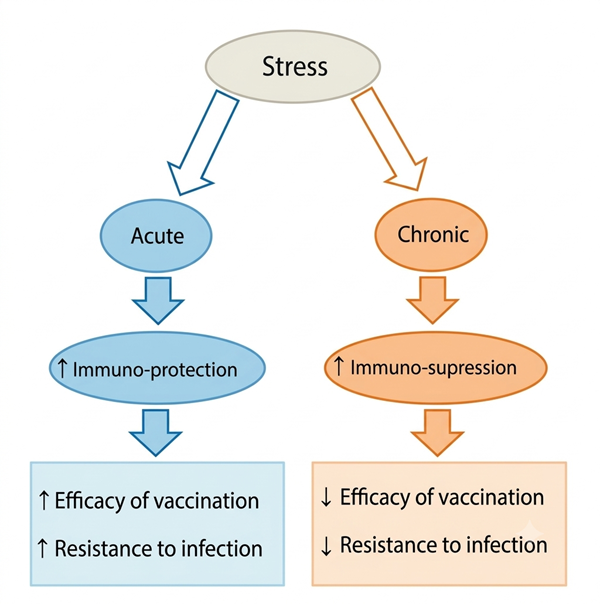
This type of stress can be seen commonly in day-to-day life. For example, stress due to immediate threat, or unexpected situation, performance pressure, exercising, running etc can be considered as an acute stress. But these stresses are followed by a pleasant feeling. This type of stress is observed for sports and game.

If a stressful situation continues over a long period of time, it is called chronic stress. It is just the opposite of acute stress. In sports, it affects the performance of an athlete in a negative manner.
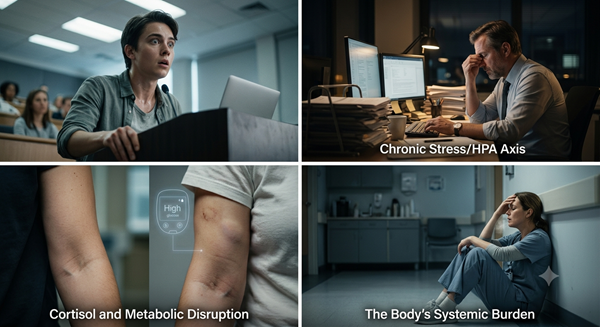
The primary difference between acute stress and chronic stress lies in their duration, underlying biological pathways, and overall health impact.
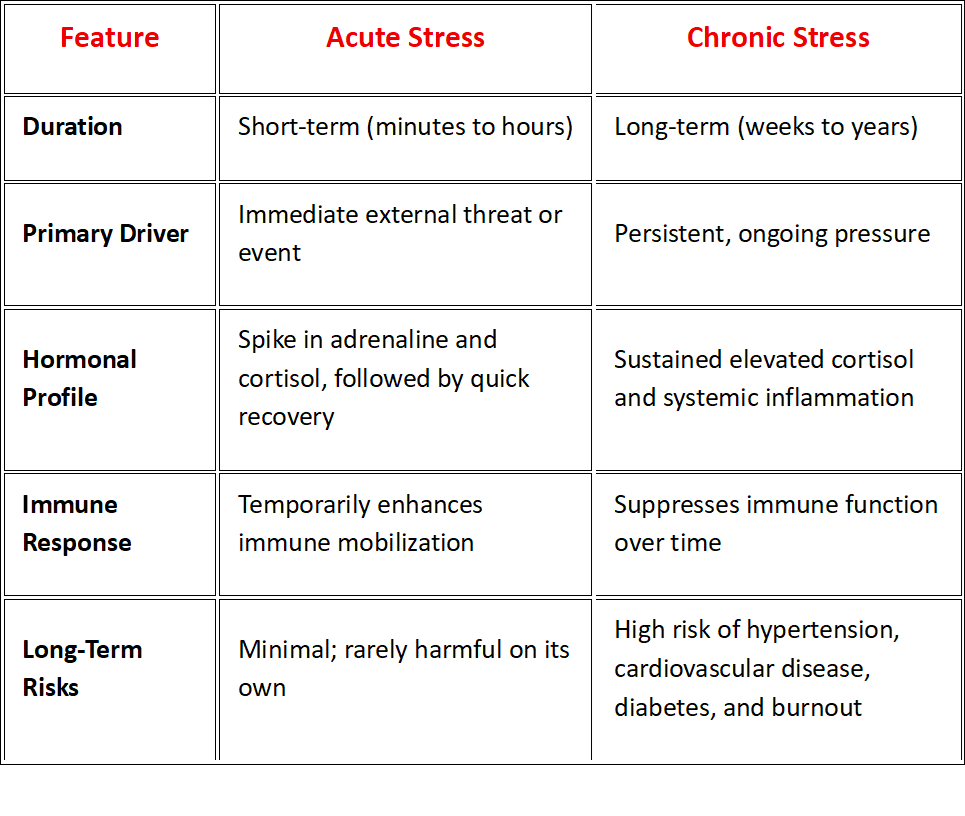

Positive Aspect of Stress: Optimum level of stress may enhance the level of performance for an athlete/sportsman. Sports psychologists suggest that a moderate amount of stress is essential for a sportsman while performing.
Negative Aspect of Stress: Stress can cause headache, allergies, cold, asthma, hypertension, backache, fatigue, diabetes etc. Physical symptoms like tension in muscle, anxiety, dizziness, fast heartbeat etc can be observed.
Stress may lead to serious health issues and may also weaken the immunity system of the body.
Management of stress: